
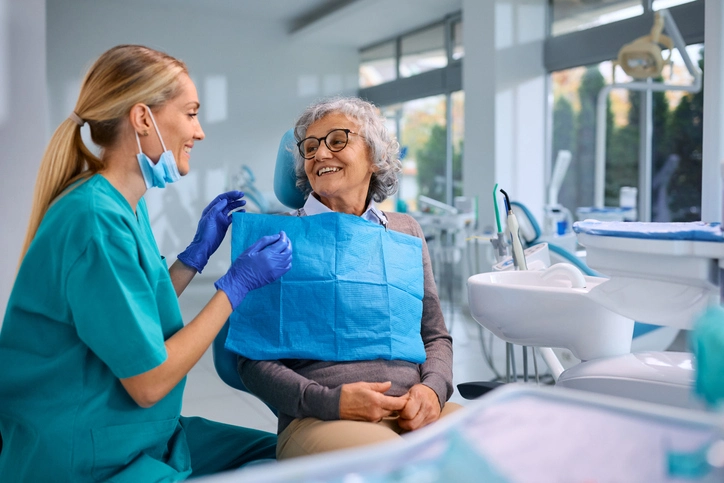
As global populations continue to age, dental professionals increasingly encounter older adults with complex medical histories, functional limitations, and unique oral health needs. Providing effective dental care for this demographic requires not only clinical skill, but also an appreciation of the physiological, psychological, and social factors that accompany aging.
Table of Contents
ToggleGeneral Management Problems in Elderly Dental Care
1. Medical and Drug History
The medical assessment of an elderly patient is foundational to safe dental care. Older adults often present with multiple chronic diseases—such as cardiovascular conditions, diabetes, arthritis, COPD, or neurological diseases—that can affect dental treatment planning. Additionally, polypharmacy is common, increasing the risk of drug interactions, adverse effects, and treatment complications.
Dentists should:
- Consult with the patient’s General Medical Practitioner (GMP) or physician whenever uncertainty exists, especially regarding invasive or prolonged treatment.
- Clarify any medications that the patient may not fully understand. Many elderly patients only recall drugs prescribed recently or those with noticeable effects.
- Be mindful of medications that impact dental care, such as anticoagulants, bisphosphonates, corticosteroids, antihypertensives, and anticholinergic drugs that contribute to xerostomia.
Because many elderly patients struggle to recall medical details, dentists should review medication lists brought from home, request updated medical summaries, or communicate directly with health professionals involved in the patient’s care.
2. Communication Challenges
Communication with elderly patients often requires patience, empathetic listening, and adaptation. Sensory impairments—including hearing loss, reduced vision, and slower cognitive processing—are common. These factors may make elderly patients hesitant to admit misunderstanding, which can lead to miscommunication or non-compliance with instructions.
To improve communication:
- Speak clearly and at a moderate pace, but avoid patronizing tones.
- Use visual aids or written instructions when necessary.
- Confirm understanding by asking the patient to repeat instructions—“teach-back method.”
- Reduce background noise, especially for patients with hearing aids.
- Position yourself so the patient can see your face, aiding lip reading.
Where comprehension is limited due to cognitive impairment, involving a caregiver or family member is often beneficial. However, always ensure consent is obtained and patient autonomy is respected.
3. Oral Hygiene Limitations
Oral hygiene practices may deteriorate as a result of reduced dexterity, arthritis, stroke-related motor impairment, or cognitive decline. These limitations make routine brushing and interdental cleaning increasingly difficult.
Helpful interventions include:
- Recommending electric toothbrushes, which require less precise movement and can improve plaque removal.
- Modifying toothbrush handles using bicycle handlebar grips, silicone tubing, or adhesive tapes to create a thicker, more ergonomic handle.
- Using self-cure acrylic to fabricate custom grip handles where appropriate.
- Advising caregivers on daily assistance with oral hygiene for patients with dementia or severe disability.
Oral hygiene must be tailored to ability, not ideal standards. Pragmatic solutions foster better long-term outcomes.
Delivery of Care
Elderly patients encounter a range of barriers to accessing dental care—from mobility limitations to systemic health issues—requiring practices to adapt their services accordingly.
Considerations in Dental Practice Settings
1. Accessibility
Under the Equality Act 2010, dental practices must provide reasonable adjustments to allow equal access to healthcare. This includes:
- Step-free access for wheelchairs and walkers.
- Sufficient maneuvering space in waiting areas.
- Accessible toilets.
These adjustments help ensure that mobility aids such as wheelchairs or Zimmer frames do not hinder the patient’s ability to receive care.
2. Appointment Timing
The timing of appointments can significantly influence treatment success:
- Diabetic patients benefit from appointments scheduled around meals and medication regimens to avoid hypoglycemia.
- Patients with arthritis often experience stiffness and functional limitations in the morning, making early appointments less suitable.
- Patients requiring transport assistance may be dependent on caregiver availability, community services, or medical transport schedules.
Effective appointment planning reduces stress for both patient and provider.
3. Positioning in the Dental Chair
Some elderly patients cannot tolerate lying flat due to medical limitations including:
- Congestive heart failure
- Severe COPD or pulmonary disease
- Gastro-oesophageal reflux disease
- Vertigo or orthostatic hypotension
Rapid changes from supine to upright can trigger dizziness or syncope. Therefore:
- Dental chairs should be reclined and returned to upright gradually.
- Pillows or cushions may provide additional comfort.
- Treatment may need to occur in a more upright position, especially for those with respiratory conditions.
Being sensitive to these limitations ensures the patient’s comfort and safety.
Domiciliary Care
Approximately 12–14% of elderly individuals are housebound to the extent that they cannot visit their medical or dental providers. Domiciliary dental care addresses the needs of these patients.
Goals of domiciliary care include:
- Providing essential oral care in the patient’s home or care residence.
- Maintaining function, comfort, and quality of life.
- Preventing pain and dental emergencies, which can be especially distressing for medically fragile patients.
Domiciliary dentistry often requires portable equipment, simplified treatment planning, and strong collaboration with caregivers and healthcare professionals. Guidance and protocols have been developed to support safe delivery of these services.
Key Points for Treatment Planning in the Elderly
Successful dental care in older adults hinges on realistic, individualized planning. The following principles guide clinicians:
Evaluate Whether Proposed Treatment is Achievable
Clinicians must consider not only ideal dentistry, but what is feasible given the patient’s:
- Systemic health
- Functional ability
- Financial constraints
- Life expectancy
- Motivation
Highly complex procedures may not be appropriate if maintenance is unlikely.
Consider Maintenance Requirements
Procedures that require frequent review or long-term diligence—such as implants, precision attachments, or complex fixed prostheses—may pose challenges. Failed complex treatments can leave elderly patients worse off, compromising both function and comfort.
Aim for Optimal Oral Function
The goal of treatment is not perfection but to maintain:
- The ability to chew
- Comfort
- Oral hygiene
- Speech
In some cases, retaining a few compromised teeth may complicate denture design or occlusion. Extraction and prosthetic replacement may sometimes offer better stability and hygiene.
Risk of Rapid Oral Deterioration
Hospitalization or acute illness can trigger:
- Rampant caries
- Periodontal breakdown
- Loss of denture-wearing ability
- Poor oral hygiene due to reduced cognition or mobility
Clinicians should anticipate accelerated changes and intervene early.
Avoid Sudden Alterations in Occlusion
Elderly patients adapt poorly to major changes in occlusal scheme. Sudden increases in vertical dimension or changes in denture articulation can cause discomfort and functional problems.
If extractions are necessary:
- Remove only a few teeth at a time.
- Gradually adjust dentures to help patients adapt more easily.
Clinical Techniques Particularly Valuable for Elderly Patients
Adhesive Restorations
Materials such as glass ionomer (GI) cements are extremely useful because:
- They chemically bond to enamel and dentine.
- They release fluoride, aiding remineralization.
- They remain functional in moist environments—ideal for root caries and patients with xerostomia.
Acid-Etch Bridgework
Minimal-preparation resin-bonded bridges:
- Are less destructive to abutment teeth.
- Avoid extensive crown preparation.
- Are usually reversible and more fail-safe.
- Offer a conservative option for partial tooth replacement.
Gradual Tooth Loss and Denture Adaptation
As elderly patients lose teeth, additions to existing partial or complete dentures help maintain function without requiring entirely new appliances. This approach:
- Reduces psychological impact.
- Supports adaptation.
- Is cost-effective and time-saving.
Replacement Dentures
When new dentures are required, it is essential to:
- Respect the patient’s established occlusal scheme.
- Use copying techniques (e.g., copying existing denture surfaces).
- Minimize changes in vertical dimension or occlusal form.
This reduces the adaptation period and enhances patient satisfaction.
Recording Occlusion
If occlusion records prove difficult due to neuromuscular limitations:
- Cuspless or monoplane teeth can reduce lateral forces.
- Lingualized occlusion offers stability and comfort.
These techniques simplify adjustments and enhance function.
Marking Dentures
Marking dentures with the patient’s name:
- Prevents loss in hospitals or care homes.
- Helps caregivers identify correct appliances.
- Is recommended by geriatric dental guidelines.
Minimally Invasive Dentistry
Bleaching, bonding, and other minimally invasive approaches can:
- Restore aesthetics with minimal tooth alteration.
- Reduce treatment time.
- Improve patient confidence.
Conclusion
Providing dental care for elderly patients requires a blend of compassion, flexibility, and tailored clinical decision-making. Understanding the medical complexities, functional limitations, and psychosocial challenges faced by older adults allows dentists to deliver safer and more effective care. Through appropriate communication, thoughtful treatment planning, and the use of conservative techniques, dental professionals can significantly enhance the oral health and quality of life of elderly individuals.
As populations age, expanding geriatric dental knowledge is essential—strengthening our ability to meet the growing demand for compassionate, accessible, and evidence-based oral healthcare for older adults.
References
- Nicolle, L.E. (2014). Geriatric Dentistry: Caring for Our Aging Population. Wiley-Blackwell.
- Grant, A.A., & Burke, F.J.T. (2020). Watson’s Clinical Dentistry (13th ed.). Elsevier.
- British Society for Disability and Oral Health (BSDH). (2009). Guidelines for the Delivery of a Domiciliary Oral Healthcare Service.
- Lewis, D., & Fiske, J. (2011). “Dental care for older people: Maintaining function and quality of life.” Dental Update, 38(4), 231–238.
- National Institute for Health and Care Excellence (NICE). (2016). Oral health for adults in care homes (NG48). London: NICE.
- British Society of Gerodontology. (2013). Guidelines for the Oral Healthcare of Older People Living in Care Homes.
- Featherstone, J.D.B. (2008). “Dental caries: A dynamic disease process.” Australian Dental Journal, 53(3), 286–291.
- Barnett, M.L. (2006). “The oral-systemic disease connection: An update for the practicing dentist.” Journal of the American Dental Association, 137(Suppl.), 5S–6S.
- Gil-Montoya, J.A., et al. (2015). “Oral health in the elderly patient and its impact on general well-being: A narrative review.” Clinical Interventions in Aging, 10, 461–467.
- Nitschke, I., & Müller, F. (2004). “Denture wearing in the elderly: Indications and expectations.” International Dental Journal, 54(6), 445–450.
- World Health Organization. (2015). Oral Health and Ageing. Geneva: WHO.
- Thomason, J.M., & Feine, J.S. (2011). “Prosthodontic treatment for edentulous patients: Prevention and management of problems.” Dental Clinics of North America, 55(2), 339–361.
- British Geriatrics Society. (2019). Comprehensive Care for Older People. London: BGS.
- Equality Act 2010. UK Government Legislation.
- Müller, F. (2014). “Oral hygiene in older adults with functional and cognitive impairment.” Gerodontology, 31(1), 3–15.