
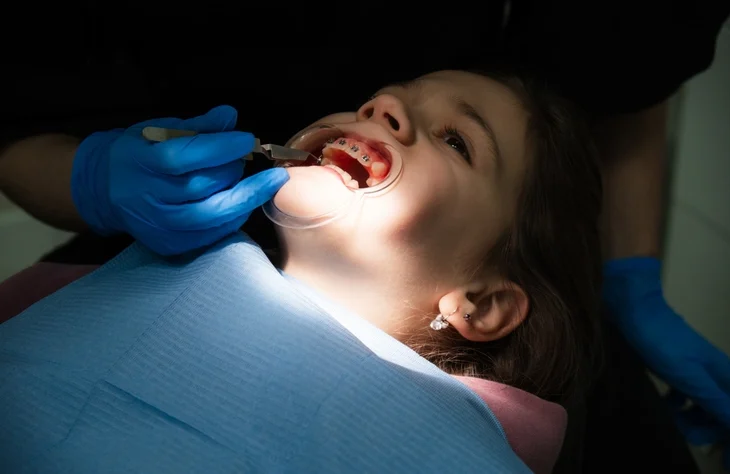
Orthodontic treatment frequently relies on close collaboration between the orthodontist and the oral surgeon. While many orthodontic problems can be managed with appliances alone, a subset of cases requires adjunctive surgical intervention to achieve optimal functional and aesthetic outcomes. Dento-alveolar surgery encompasses a group of minor oral surgical procedures that facilitate orthodontic tooth movement, eruption, alignment, and stability. These procedures are typically performed at the request of the orthodontist and are designed to remove anatomical or biological barriers to successful orthodontic treatment.
Common dento-alveolar procedures that assist orthodontic therapy include frenectomy, pericision, surgical exposure of unerupted teeth, and tooth repositioning or transplantation. Each of these interventions has specific indications, techniques, and limitations, and their appropriate application requires a sound understanding of both orthodontic biomechanics and oral surgical principles.
Table of Contents
ToggleThe Role of Dento-Alveolar Surgery in Orthodontics
Orthodontic tooth movement depends on the coordinated remodeling of alveolar bone and periodontal tissues. However, various anatomical structures—such as dense fibrous attachments, thick mucoperiosteum, retained deciduous teeth, supernumeraries, or unfavorable eruption paths—may hinder tooth movement or eruption. In such cases, surgical intervention may be required to:
- Remove mechanical obstructions
- Modify soft tissue attachments
- Facilitate controlled orthodontic traction
- Prevent relapse following orthodontic correction
- Provide alternative solutions when orthodontic movement alone is not feasible
Dento-alveolar surgery is generally conservative in nature and aims to complement, rather than replace, orthodontic treatment.
Frenectomy in Orthodontic Practice
Definition and Purpose
A frenectomy is the surgical removal of a frenum—a fold of mucous membrane containing fibrous connective tissue and occasionally muscle fibers—that may interfere with normal oral function or orthodontic outcomes. In orthodontics, frenectomy is most commonly associated with the management of a median diastema between the maxillary central incisors.
Indications
A frenectomy is indicated only in selected cases and should not be performed routinely. Its primary orthodontic indication is a persistent median diastema associated with an abnormal labial frenum. Clinical assessment includes gentle traction of the upper lip; if this produces blanching of the palatal mucosa around the incisive papilla, it suggests that the frenum has fibrous extensions inserting into the alveolus or palatal tissues.
Importantly, frenectomy should not be performed before orthodontic space closure in most cases. The preferred sequence is orthodontic closure of the diastema followed by frenectomy to reduce the risk of relapse.
Surgical Technique
Orthodontic frenectomy differs from pre-prosthetic frenectomy. The goal is not merely to remove superficial tissue but to excise the deep fibrous insertions extending into the alveolar bone. This inevitably leaves a raw alveolar surface following excision.
After excision:
- The exposed area may be dressed with hemostatic or protective materials such as oxidized cellulose or antiseptic packs.
- Healing occurs by secondary intention.
- Meticulous surgical technique is essential to minimize scarring and postoperative discomfort.
Limitations and Considerations
- Frenectomy alone does not close a diastema.
- Inappropriate timing may worsen spacing or scar formation.
- Case selection is critical; not all diastemas are frenal in origin.
Pericision: Preventing Orthodontic Relapse
Concept and Rationale
Pericision is a minor surgical technique involving the incision of supra-alveolar periodontal fibers. These fibers, particularly the circular and transeptal fibers, possess elastic memory and can contribute to relapse following orthodontic correction, especially after tooth rotation.
Indications
Pericision is indicated when:
- Teeth have been significantly rotated orthodontically
- There is a high risk of relapse despite retention
- Long-term stability is a concern
It is most commonly used for anterior teeth where relapse is both common and aesthetically significant.
Technique
The procedure involves:
- Local anesthesia
- Precise incision of gingival and periodontal fibers surrounding the tooth
- Care to avoid unnecessary trauma to bone or soft tissues
Pericision is simple, minimally invasive, and often performed immediately before or after appliance removal.
Clinical Significance
While retention appliances remain the cornerstone of relapse prevention, pericision can enhance stability in selected cases. It should be viewed as an adjunct, not a substitute, for proper orthodontic retention.
Surgical Exposure of Unerupted Teeth
Indications for Tooth Exposure
Surgical exposure is most frequently performed for unerupted maxillary canines, although impacted incisors may also require intervention. Orthodontic traction is considered the treatment of choice provided that:
- The tooth apex is favorably positioned
- There is no severe pathology or ankylosis
- Adequate space can be created within the dental arch
Extraction is generally reserved for cases with poor prognosis or unfavorable anatomy.
Principles of Tooth Exposure
The primary objective of surgical exposure is to remove all sacrificable impediments to eruption and orthodontic movement while preserving periodontal health. Key principles include:
- Minimal bone removal
- Preservation of attached gingiva
- Avoidance of unnecessary tooth manipulation
- Immediate or early bonding of an attachment for orthodontic traction
Bonding Techniques
Bonding an orthodontic attachment—such as an eyelet, bracket, or gold chain—at the time of surgery reduces the likelihood of repeat operations. However, it requires excellent moisture control in a challenging surgical field and careful handling of composite materials.
Surgical Techniques for Tooth Exposure
Palatal Approach
Palatally impacted teeth are exposed using a palatal envelope flap. Important considerations include:
- Careful incision design to avoid palatine arteries
- Avoidance of palatal relieving incisions
- Adequate flap length to achieve exposure without excessive tension
Bone is removed conservatively, often using chisels, to expose the maximum crown diameter and cusp tip. The tooth should not be mobilized, as this may damage the periodontal ligament and compromise orthodontic movement.
After exposure:
- A bracket may be bonded if orthodontic traction is planned
- The wound may be packed, dressed, cauterized, or partially closed
- Palatal mucoperiosteum regenerates well, allowing generous excision if required
Buccal Approach
Buccally impacted teeth are accessed via a buccal flap, with particular emphasis on preserving attached gingiva. Techniques include:
- Apically repositioned flaps
- Coronal repositioning with elastics or chains
- Subgingival tunneling for orthodontic attachments
Bonding is ideally performed during surgery to avoid repeated exposure.
Teeth Within the Arch
For teeth impacted within the alveolar ridge, crestal bone may be removed as needed. The goal remains conservative exposure with maximum preservation of periodontal structures.
Tooth Repositioning and Transplantation
Overview
Tooth repositioning, commonly referred to as transplantation, involves the surgical removal of a tooth and its placement into a prepared socket in a more favorable position. While reported success rates may be high, real-world outcomes are variable, and the procedure is used sparingly.
Indications
Transplantation is generally considered only when:
- Surgical exposure and orthodontic traction are not feasible
- The patient refuses prolonged orthodontic treatment
- The tooth is otherwise healthy and suitable for transplantation
The maxillary canine is the most commonly transplanted tooth due to its high incidence of impaction.
Case Selection and Planning
Careful preoperative assessment is essential:
- Adequate space must be confirmed clinically and radiographically
- Comparison with the contralateral tooth is helpful
- Grinding healthy adjacent teeth to create space is unacceptable
If insufficient space exists, orthodontic treatment is required prior to transplantation.
Surgical Technique for Transplantation
The procedure involves several critical steps:
- Exposure of the Tooth
A buccal or palatal flap is raised to assess the tooth and ensure atraumatic removal. - Removal of Deciduous Tooth
If present, the deciduous predecessor is extracted. - Socket Preparation
A new socket is surgically prepared using a bur to accommodate the transplanted tooth. - Tooth Reimplantation
The tooth is placed gently into the socket without force to preserve periodontal ligament vitality. - Flap Closure and Splinting
The flap is sutured, and a close-fitting, non-cemented splint is applied. - Postoperative Management
Functional splinting is maintained for 7–10 days. Root canal treatment is performed as soon as feasible.
Complications and Long-Term Follow-Up
Despite careful technique, transplantation carries risks, including:
- Root resorption
- Ankylosis
- Pulp necrosis
- Periodontal breakdown
Regular follow-up with clinical and radiographic evaluation is essential for early detection and management of complications.
Conclusion
Dento-alveolar surgery plays a vital supportive role in modern orthodontic practice. Procedures such as frenectomy, pericision, tooth exposure, and transplantation enable orthodontists to overcome anatomical limitations, enhance treatment efficiency, and improve long-term stability. However, these interventions require meticulous planning, precise surgical execution, and close interdisciplinary collaboration.
Successful outcomes depend on careful case selection, a thorough understanding of biological principles, and respect for periodontal health. When appropriately applied, dento-alveolar surgery significantly expands the scope and effectiveness of orthodontic treatment, ultimately benefiting both function and aesthetics.
References
- Peterson, L. J., Ellis, E., Hupp, J. R., & Tucker, M. R.
Contemporary Oral and Maxillofacial Surgery. 7th ed. St. Louis: Elsevier; 2019. - Fonseca, R. J., Barber, H. D., Powers, M. P., & Frost, D. E.
Oral and Maxillofacial Surgery. Vol. 1. 3rd ed. St. Louis: Elsevier; 2018. - Proffit, W. R., Fields, H. W., Larson, B., & Sarver, D. M.
Contemporary Orthodontics. 6th ed. St. Louis: Elsevier; 2019. - Miloro, M., Ghali, G. E., Larsen, P. E., & Waite, P. D.
Peterson’s Principles of Oral and Maxillofacial Surgery. 3rd ed. Shelton, CT: PMPH USA; 2012. - Archer, W. H.
Oral Surgery: A Step-by-Step Atlas of Operative Techniques. 5th ed. Philadelphia: Saunders; 1975. - Kruger, G. O.
Textbook of Oral and Maxillofacial Surgery. 6th ed. St. Louis: Mosby; 1984. - Bishara, S. E.
Textbook of Orthodontics. Philadelphia: Saunders; 2001. - Andreasen, J. O., Andreasen, F. M., & Andersson, L.
Textbook and Color Atlas of Traumatic Injuries to the Teeth. 5th ed. Oxford: Wiley-Blackwell; 2019. - Kokich, V. G., & Mathews, D. P.
Surgical and orthodontic management of impacted teeth. Dental Clinics of North America. 1993;37(2):181–204. - Zachrisson, B. U.
Clinical implications of recent orthodontic–periodontic research findings. Seminars in Orthodontics. 1996;2(1):4–12.