
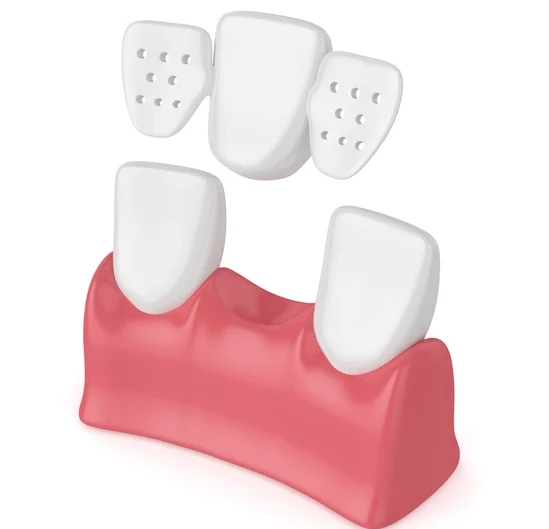
Resin-bonded bridges (RBBs) have become an essential component of contemporary restorative dentistry. Their development reflects the profession’s broader movement toward minimally invasive and adhesive-based treatment philosophies. For carefully selected cases, they offer a conservative, aesthetically acceptable, and cost-effective solution for replacing missing teeth while preserving the structural integrity of abutment teeth.
Table of Contents
ToggleIntroduction
Tooth loss, whether from trauma, caries, congenitally missing teeth, or periodontal disease, remains a common clinical problem. Traditionally, replacement options have included removable partial dentures, conventional fixed bridges, and more recently, implant-supported restorations. While each option carries advantages, many involve significant tooth preparation, surgery, or financial investment.
Resin-bonded bridges emerged as a less invasive alternative. Originally known as “Maryland bridges” after their development at the University of Maryland, these restorations rely on adhesive bonding rather than extensive mechanical retention. They typically consist of a metal (or fibre-reinforced composite) framework supporting a pontic, with one or more thin “wings” that bond to enamel surfaces of abutment teeth using resin cement.
The principle is simple: maximum adhesion with minimal tooth reduction.
The modern resin-bonded bridge is most commonly a cantilever design with a single abutment and single pontic. This design reduces biomechanical complications, especially debonding, which historically plagued earlier fixed-fixed versions.
Classification of Resin-Bonded Bridges
A. Based on Position
RBBs can be used in both anterior and posterior regions, but their behaviour and longevity differ.
- Anterior RBBs
Commonly used to replace missing incisors, canines, or even premolars. Enamel bonding is optimal in this region, and occlusal forces are comparatively lower. Aesthetic considerations, however, are significant. - Posterior RBBs
Less commonly used due to increased functional loading and anatomical challenges (e.g., limited enamel surfaces, occlusal clearance). Proper case selection is crucial.
B. Based on Retention Mechanism
Retention can be mechanical, micromechanical, or chemical — often a combination in modern approaches.
1. Macromechanical Retention
Early designs relied heavily on mechanical features incorporated into the metal framework:
- Perforated wings (Rochette bridge)
Resin would flow through holes in the metal wing, creating mechanical “rivets.” Although innovative, these designs suffered frequent debonding and allowed plaque retention. - Mesh or lattice designs (Klett-O-Bond®)
Provided greater resin penetration but still inferior bonding compared with modern chemical methods. - Particular designs (Crystalbond™)
Used textured metal to improve mechanical retention.
These methods were important historically but have largely been replaced by advanced bonding strategies.
2. Micromechanical Retention
Achieved through surface roughening of the metal wing.
- Electrolytically etched (Maryland bridge)
Early Maryland bridges used an electrolytic process to create micro-porosities on non-precious alloys, allowing resin penetration.
Provided stronger bonds than perforation systems but still insufficient compared to contemporary cements. - Chemically etched
Predates sandblasting and involved chemical surface alteration of the metal.
3. Chemical Retention
Modern RBBs rely predominantly on:
- Air-abrasion (sandblasting)
Creates a high-surface-energy, microscopically roughened surface ideal for chemical bonding. - Tin-plating
Enhances bonding by creating a reactive oxide surface.
With the evolution of resin cements — especially MDP-containing resin adhesives like Panavia™ 21 — chemical retention has become the gold standard. These cements create strong bonds both to enamel and to the oxide layer of non-precious alloys.
Advantages of Resin-Bonded Bridges
RBBs have several characteristics that make them appealing in modern restorative dentistry:
- Minimally invasive
Little to no tooth preparation is required; enamel is preserved. This is a significant advantage over conventional full-coverage bridges that require major reduction and risk pulp damage. - No local anaesthetic often required
As preparation remains in enamel, procedures are generally comfortable for patients. - Reversible or repairable
If debonding occurs, the bridge can often be re-bonded with minimal difficulty. - Lower cost relative to implants and conventional bridges
Especially beneficial for young patients, orthodontic cases, or situations where implants are contraindicated. - Quick and simple clinical workflow
Fewer appointments and less biological trauma. - Excellent interim or long-term solution
Particularly suitable for adolescents waiting for implant placement after growth completion. - Preservation of periodontal health
Minimal encroachment on soft tissues compared to removable prostheses.
Disadvantages and Limitations
Despite their benefits, RBBs are not universally suitable.
1. Risk of Debonding
The most significant issue. Causes include:
- Poor case selection
- Suboptimal enamel bonding
- Non-ideal occlusion (e.g., deep bite)
- Poor design
- Contamination during cementation
However, debonding often occurs without damage to the abutment, making repairs straightforward.
2. Aesthetic Challenges
The metal wing may show through thin anterior enamel, creating a gray shine-through effect.
Options for management:
- Use opaque resin cement
- Modify wing design
- Use high-opacity porcelain veneer on labial surface
- Consider fibre-reinforced RBBs in specific cases
3. Limited Use in Long-Span Cases
RBBs are not suitable for replacing multiple missing teeth unless very favourable conditions exist.
4. Soft Tissue Limitations
Highly resorbed ridges may compromise pontic aesthetics.
An ovate pontic design is especially useful in such cases.
5. Requires Good Occlusion
Night grinding, edge-to-edge bites, or heavy occlusal forces threaten longevity.
Indications for Resin-Bonded Bridges
RBBs are ideal for:
- Short edentulous spans (usually a single tooth)
- Sound abutment teeth with minimal restorations
- Young patients who are unsuitable for implants
- Patients seeking minimally invasive dentistry
- Orthodontic retention combined with tooth replacement
- Periodontal splinting (rare with modern practice)
- Space maintenance
- Interim restoration pending implant placement
Crucial requirement:
Sufficient enamel surface area and enamel quality for reliable bonding.
Treatment Planning Considerations
Proper planning significantly improves success:
A. Orthodontic Considerations
If space needs to be opened or adjacent teeth uprighted, orthodontic treatment must be completed first.
Retention using a removable retainer for at least three months is recommended before bridge placement.
B. Occlusal Evaluation
Cantilever RBBs require:
- No heavy occlusal loading on the pontic
- No contact in protrusion or lateral excursions
- Sufficient clearance for the metal wing (≥0.7 mm)
C. Abutment Tooth Selection
Ideal abutments have:
- Sufficient enamel surface
- Favourable morphology (flat lingual surfaces)
- No mobility
- Limited existing restorations
D. Aesthetic Considerations
Especially important in anterior regions:
- Pontic shade match
- Pontic emergence profile
- Avoiding grey shine-through
Design Concepts
Most modern RBBs are cantilevered.
Why cantilever?
Fixed-fixed RBBs were associated with:
- Debonding of one wing
- Caries developing under the loose retainer
- Difficulty detecting failure
- Stress distribution problems
Cantilevers avoid this issue entirely and are generally more predictable.
Framework Design Features
- Maximum coverage of available enamel
- Wrap-around extensions covering >180° of the abutment tooth
- Mesial and distal grooves for enhanced resistance
- Cingulum rests or occlusal rests to share load
- Connector height of at least 2 mm
Tooth Preparation Guidelines
Though often minimal, certain strategic modifications improve retention.
Key Principles
- Single path of insertion
Guiding planes must be created to avoid undercuts and allow passive seating. - Clearance
Achieve ≥0.7 mm space for the wing without creating occlusal interference: Resistance Features, Mesial/distal grooves, Chamfer finishing lines - Rest seats on cingulum or occlusal surfaces
- Maintain Preparation in Enamel
Enamel bonding is more predictable and durable than dentine bonding. - Maximal Enamel Coverage
Larger bonding area increases resistance to shear and tensile forces.
Laboratory and Impression Procedures
Accurate impressions are essential:
Take an elastomeric impression for the working model
Alginate for the opposing arch
Ensure correct pontic design, contacts, and framework fitting
Framework try-in must check:
Fit
Seating
Aesthetics
Occlusion
Before cementation, the fitting surface must be thoroughly cleaned with alcohol.
Cementation Technique
The bonding process is the most critical determinant of success.
Step-by-Step Protocol
Rubber dam placement
Prevents contamination.Tooth isolation and cleaning
Remove plaque, pumice clean if needed.Selective etching and bonding
Use enamel etch where appropriate; apply dentine adhesive if dentine is exposed.Metal wing preparation
Air-abrasion (sandblasting)
Application of MDP-containing primer
Apply Panavia™ 21 to the wing
Seat the bridge firmly.Clean excess cement
Use Super Floss® and acetate strips.Apply OxyGuard®
Prevents oxygen-inhibited layer formation.Allow full set, remove rubber dam, and recheck occlusion.
Common Problems and Their Management
1. Dentine Exposure
Use a dentine bonding system.
However, ideally avoid dentine entirely through careful preparation.
2. Metal Shine-Through
Possible solutions:
- Opaque resin cements
- Wing thinning and strategic reduction
- Porcelain labial veneer
- Fibre-reinforced RBB (for selected cases)
3. Debonding
Management:
- If single wing debonds → easily removed by tapping or ultrasonic vibration
- Rebond using appropriate adhesive protocol
- If persistent → consider conventional bridge or implant
Note: Debonding is often a fail-safe, preventing tooth damage.
4. Caries Under Debonded Wing
If moisture leakage goes unnoticed, caries may develop.
If detected:
- Remove bridge
- Restore tooth
- Assess suitability for rebonding or alternative options
Contemporary Developments: Fibre-Reinforced Composite RBBs
An alternative to metal frameworks:
- More aesthetic due to translucency
- Easier chair-side fabrication
- Useful in young patients
Limitations:
- Lower fracture resistance
- Technique sensitive
- Shorter lifespan than metal frameworks
Still, they play an important role in certain clinical scenarios.
Longevity and Success Rates
Recent systematic reviews report:
- 5-year survival for cantilever RBBs: 80–95%
- Fixed-fixed RBBs: significantly lower due to debonding
The most influential factors:
- Operator skill
- Occlusion management
- Adhesive protocol
- Case selection
When properly executed, RBBs can remain functional and aesthetic for well over a decade.
Conclusion
Resin-bonded bridges embody the ideals of modern restorative dentistry: conservation, preservation, adhesion, and patient-centered care. While they are highly successful in selected cases, they require meticulous planning, precise preparation, and strict adherence to bonding protocols for long-term success.
Their minimally invasive nature makes them invaluable for young patients, those unsuitable for implants, and individuals seeking conservative treatment options. Understanding their biomechanics, indications, limitations, and technical steps allows clinicians to use them predictably and confidently.
With correct case selection and careful technique, resin-bonded bridges remain one of the most elegant solutions for single-tooth replacement in dentistry.
References
- Livaditis, G. J., & Thompson, V. P. (1982). Etched castings: An improved retentive mechanism for resin-bonded retainers. Journal of Prosthetic Dentistry, 47(1), 52–58.
(Foundational paper introducing etched cast metal retainers → “Maryland Bridge”.) - Rochette, A. L. (1973). Attachment of a splint to enamel of lower incisors using a posterior composite resin. Journal of Prosthetic Dentistry, 30(4), 418–423.
(Earliest description of perforated metal retainer → “Rochette bridge”.) - Thomas, M., et al. (2017). A systematic review of the survival and complication rates of resin-bonded fixed dental prostheses after at least 5 years. Clinical Oral Implants Research, 28, 11–21.
(The article cited in your textbook.) - Pjetursson, B. E., et al. (2008). A systematic review of the survival and complication rates of resin-bonded bridges. Clinical Oral Implants Research, 19, 131–141.
- Botelho, M. G. (2011). Long-term evaluation of cantilevered resin-bonded fixed partial dentures retained with two adhesive resins. Journal of Dentistry, 39(10), 777–783.
- Sailer, I., et al. (2013). A systematic review of the performance of resin-bonded fixed dental prostheses. Clinical Oral Implants Research, 24(Suppl. 6), 63–76.
- Van Meerbeek, B., et al. (2010). State of the art of self-etch adhesives. Dental Materials, 26(1), 17–28.
- Yoshida, Y., et al. (2004). Chemical interaction of MDP with hydroxyapatite. Journal of Dental Research, 83(6), 454–458.
(Describes why Panavia’s MDP monomer bonds well to enamel & metal oxides.) - Matinlinna, J. P., et al. (2018). Bonding of resin adhesives to alloys and ceramics in dentistry. Dental Materials, 34(1), 7–25.
- Millett, D. T., & Creanor, S. (2000). Adhesion of orthodontic brackets to enamel and dentine: A review. European Journal of Orthodontics, 22(5), 475–485.
(Relevant for understanding enamel bonding mechanisms.) - Shillingburg, H. T. et al. (2012). Fundamentals of Fixed Prosthodontics (4th ed.). Quintessence Publishing.
(Widely used reference for preparation, design, resistance form.) - Goodacre, C. J., et al. (2003). Clinical complications in fixed prosthodontics. Journal of Prosthetic Dentistry, 90, 31–41.
- Troedson, M., & Karlsson, S. (1999). Mandibular loading of cantilever resin-bonded bridges. Journal of Oral Rehabilitation, 26(11), 923–928.
- Bell, A., et al. (2014). Clinical performance of fibre-reinforced composite bridges. Acta Odontologica Scandinavica, 72(8), 596–601.
- Behr, M., et al. (2009). Clinical performance of anterior fiber-reinforced composite resin bridges: A prospective cohort study. Dental Materials, 25(4), 468–475.
- Rosenstiel, S. F., Land, M. F., & Fujimoto, J. (2016). Contemporary Fixed Prosthodontics (5th ed.). Mosby Elsevier.
- Dawson, P. E. (2006). Functional Occlusion: From TMJ to Smile Design. Mosby Elsevier.
(Useful for occlusal evaluation relevant to RBBs.) - Burke, F. J. T. (2015). Minimally Invasive Dentistry: Concepts and Techniques. British Dental Association.