
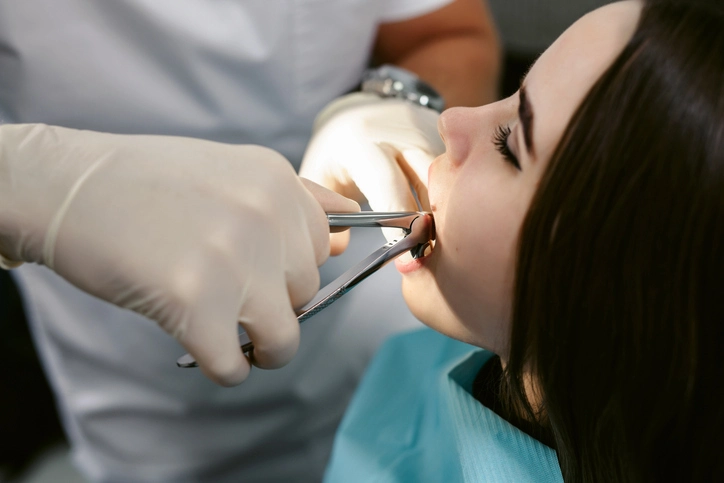
Dento-alveolar surgery forms a fundamental component of oral and maxillofacial surgical practice. Among its many procedures, the removal of unerupted or impacted teeth—other than third molars—represents a distinct and clinically significant category. These teeth often include maxillary canines, premolars, supernumerary teeth, and occasionally mandibular canines or deciduous molars. Their removal may be required to facilitate orthodontic treatment, prevent pathological sequelae, or address functional and aesthetic concerns.
Unlike third molars, unerupted teeth in the anterior and premolar regions present unique diagnostic and surgical challenges. Their proximity to vital anatomical structures, variable positions within the alveolus, and the importance of preserving surrounding bone and soft tissues necessitate careful planning and precise surgical execution.
Table of Contents
ToggleGeneral Indications for Removal of Unerupted Teeth
The decision to remove an unerupted tooth must be individualized and based on sound clinical judgment. Common indications include:
- Interference with eruption or alignment of adjacent teeth
- Prevention or management of cystic or tumorous changes
- Contribution to malocclusion or orthodontic treatment planning
- Recurrent infection or periodontal compromise
- Resorption of adjacent tooth roots
- Functional impairment or aesthetic concerns
In some cases, especially involving deeply impacted mandibular canines or asymptomatic teeth, conservative management may be preferred. Therefore, accurate assessment is critical.
Assessment and Diagnostic Considerations
Clinical Examination
Clinical evaluation begins with inspection and palpation of the alveolar ridge. Buccal or palatal bulges may indicate the position of an unerupted tooth, particularly in the case of maxillary canines. Delayed eruption, asymmetry, or spacing anomalies may provide indirect clues to impaction.
Radiographic Assessment
Radiographic examination is indispensable. Periapical radiographs, occlusal views, and panoramic radiographs are commonly employed. Localization techniques such as the parallax method, which uses two radiographs taken at different angles, help determine the bucco-palatal position of the tooth. Accurate localization informs flap design, bone removal, and the direction of tooth elevation.
Maxillary Canines
Importance and Frequency of Impaction
Maxillary canines are the most commonly impacted teeth after third molars. Their long eruption path, late eruption timing, and susceptibility to guidance disturbances make them particularly vulnerable to impaction. Most impacted maxillary canines lie palatally, although buccal and within-arch positions are also encountered.
Surgical Approaches Based on Position
Buccally Impacted Canines
Buccal impactions are approached using a buccal mucoperiosteal flap. The flap design follows standard surgical principles, ensuring adequate access while preserving blood supply. Bone removal is limited to exposing the crown sufficiently for elevation.
Palatally Impacted Canines
Palatal impactions require a palatal flap, which is more technically demanding due to the thickness of the palatal mucosa and its rich vascular supply.
Key features of palatal flap design include:
- Reflection of a full-thickness mucoperiosteal flap
- Incision along the gingival crevice, extending from canine to canine for bilateral impactions or across the midline for unilateral cases
- Use of an envelope flap to avoid transection of the palatine artery
The neurovascular bundle emerging from the incisive foramen may be sacrificed if necessary, usually without significant morbidity. Bleeding can be controlled effectively using bone wax.
Bone Removal and Tooth Delivery
Bone is removed over the crown until the maximum convexity and incisal edge are exposed. If the root morphology and withdrawal path are favorable, the tooth may be delivered intact. When unfavorable curvature exists, the tooth is sectioned at the cervical margin using a tapered fissure bur, and the crown and root are removed separately.
Closure and Postoperative Considerations
After thorough debridement, closure is achieved using vertical mattress sutures. This technique minimizes dead space and reduces the risk of postoperative hematoma formation.
Mandibular Canines
Characteristics and Management
Mandibular canines are less frequently impacted than maxillary canines and most commonly lie buccally. Many can be removed using elevators or root forceps with minimal bone removal.
Deeply impacted mandibular canines, whether buccal or lingual, rarely require removal unless they pose a clear risk. When surgical removal is indicated, access can be achieved using a degloving incision, which provides wide exposure while preserving important anatomical structures.
Maxillary Premolars
Typical Position and Challenges
Maxillary premolars that fail to erupt are most often located palatally. Their removal depends on eruption status and root morphology.
- Partially erupted, conical-rooted premolars can often be elevated without sectioning.
- Completely unerupted premolars require a surgical approach similar to that used for palatally impacted canines.
Within-Arch Premolars
Premolars located within the dental arch are approached buccally. These teeth are usually sectioned and removed piecemeal to minimize trauma to surrounding bone and adjacent teeth.
Mandibular Premolars
Anatomical Considerations
Mandibular premolars are frequently angled lingually and lie in close proximity to the mental nerve. This anatomical relationship significantly influences surgical planning.
Surgical Technique
An extended buccal flap is raised to allow visualization and protection of the mental nerve. Buccal cortical bone is removed to expose the cervical margin of the tooth. The tooth is then sectioned at this level:
- The crown is displaced downward into the space created by bone removal
- The root is elevated upward, following its path of least resistance
The so-called “broken instrument technique” can be particularly helpful in difficult cases, allowing controlled engagement of the tooth in confined spaces.
Submerged Deciduous Molars
Definition and Indications for Removal
Submerged deciduous molars are infraoccluded teeth that fail to exfoliate and may interfere with normal eruption of permanent successors. Removal is indicated when they disrupt occlusal development or orthodontic planning.
Surgical Approach
These teeth are approached buccally and sectioned vertically. Each root is then elevated along its individual path of withdrawal. Care is taken to preserve the surrounding alveolar bone, especially when a permanent successor is present.
Supernumerary Teeth
Overview and Clinical Significance
Supernumerary teeth arise due to hyperdontia and may occur anywhere in the dental arch. They commonly impede the eruption of permanent teeth, particularly maxillary incisors and canines.
Surgical Challenges
Removal of supernumerary teeth can be deceptively difficult. Challenges include:
- Difficulty in precise localization
- Unusual morphology
- Proximity to developing permanent teeth
The surgical approach mirrors that used for the tooth they obstruct or replace, emphasizing careful dissection and conservative bone removal.
Piezosurgery in Dento-Alveolar Procedures
Principles of Piezosurgery
Piezosurgery employs ultrasonic vibrations, typically between 60 and 200 mm/sec, to selectively cut mineralized tissue while sparing soft tissues such as nerves, blood vessels, and mucosa.
Advantages
- Reduced risk of nerve and vessel injury
- Enhanced precision in bone cutting
- Improved visibility due to cavitation effect
- Reduced postoperative swelling and discomfort
Clinical Applications
Piezosurgery is particularly useful when vital structures such as the mental nerve or maxillary sinus lining are in close proximity. It has gained prominence in implantology, bone augmentation, and sinus lift procedures.
Limitations
Despite its advantages, piezosurgery has not yet replaced conventional rotary instruments for routine dento-alveolar surgery. Limitations include increased operative time and equipment cost.
Postoperative Care and Complications
Regardless of tooth type or surgical approach, meticulous postoperative management is essential. Potential complications include:
- Bleeding and hematoma formation
- Infection
- Damage to adjacent teeth or nerves
- Delayed healing
Adequate debridement, tension-free closure, and clear postoperative instructions significantly reduce complication rates.
Conclusion
The removal of unerupted teeth other than third molars is a complex yet essential aspect of dento-alveolar surgery. Successful outcomes depend on accurate diagnosis, thorough understanding of dental and maxillofacial anatomy, and the selection of appropriate surgical techniques tailored to tooth position and morphology.
Maxillary canines present the greatest challenge due to their frequency of impaction and anatomical variability, while premolars and supernumeraries require individualized approaches. Advances such as piezosurgery offer promising adjuncts, particularly in anatomically sensitive regions.
For dental students and clinicians alike, mastery of these principles ensures safe, efficient, and predictable management of unerupted teeth, ultimately contributing to optimal functional and aesthetic patient outcomes.
References
- Peterson LJ, Ellis E, Hupp JR, Tucker MR.
Peterson’s Principles of Oral and Maxillofacial Surgery. 3rd ed. St. Louis: Mosby Elsevier; 2012. - Hupp JR, Ellis E, Tucker MR.
Contemporary Oral and Maxillofacial Surgery. 7th ed. St. Louis: Elsevier; 2019. - Howe GL, Poyton HG.
Prevention of Periodontal Disease. London: Wright; 1990. - Bennett JD, Dolan KD.
Oral and Maxillofacial Surgery. London: Churchill Livingstone; 1998. - Whaites E, Drage N.
Essentials of Dental Radiography and Radiology. 5th ed. Edinburgh: Churchill Livingstone Elsevier; 2013. - Shafer WG, Hine MK, Levy BM.
Shafer’s Textbook of Oral Pathology. 8th ed. New Delhi: Elsevier; 2016. - Miloro M, Ghali GE, Larsen P, Waite P.
Peterson’s Principles of Oral and Maxillofacial Surgery. 2nd ed. Hamilton: BC Decker; 2004. - Fonseca RJ, Barber HD, Powers MP, Frost DE.
Oral and Maxillofacial Surgery. Vol. 1. 2nd ed. St. Louis: Saunders Elsevier; 2009. - Sailer HF, Pajarola GF.
Oral Surgery for the General Dentist. Stuttgart: Thieme; 1999. - Scarano A, et al.
Piezosurgery versus conventional rotatory instruments in bone surgery: a review.
British Journal of Oral and Maxillofacial Surgery. 2011;49(8):1–6. - Vercellotti T.
Technological characteristics and clinical indications of piezoelectric bone surgery.
Minerva Stomatologica. 2004;53(5):207–214. - Koch G, Poulsen S.
Pediatric Dentistry: A Clinical Approach. 2nd ed. Oxford: Wiley-Blackwell; 2009. - Andreasen JO, Andreasen FM, Andersson L.
Textbook and Color Atlas of Traumatic Injuries to the Teeth. 4th ed. Oxford: Blackwell Munksgaard; 2007.