
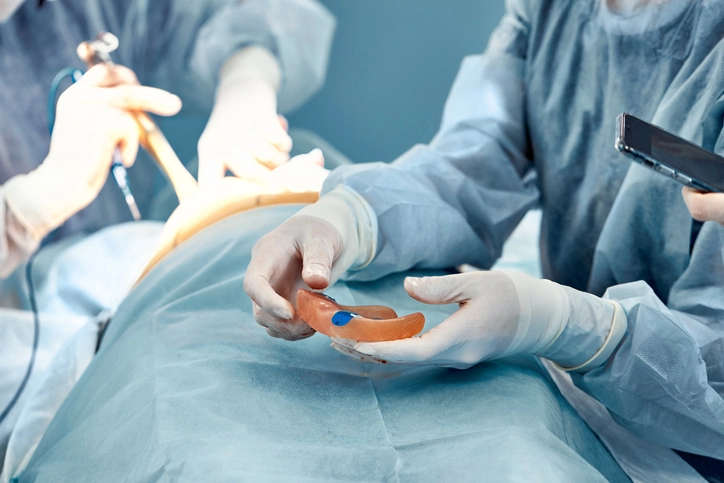
Pre-prosthetic surgery refers to surgical procedures carried out on the oral hard and soft tissues with the aim of improving the foundation for a dental prosthesis. These procedures are not performed for disease management alone, but rather to enhance comfort, stability, retention, and function of dentures or other prosthetic appliances. Among these procedures, minor pre-prosthetic surgery occupies an important position, as many denture-related problems can be corrected with relatively conservative surgical interventions.
Loss of teeth initiates a cascade of anatomical and physiological changes within the oral cavity. Chief among these is alveolar bone resorption, a progressive and irreversible process that compromises ridge height and width. As the alveolar ridge diminishes, denture construction becomes more challenging, often resulting in instability, poor retention, and patient dissatisfaction. Therefore, the primary objective of minor pre-prosthetic surgery is to preserve or improve the denture-bearing area while minimizing surgical trauma.
Table of Contents
TogglePrinciples of Minor Pre-Prosthetic Surgery
The guiding philosophy of minor pre-prosthetic surgery is conservation rather than excision. Whenever possible, preservation of alveolar bone and soft tissue should take precedence over aggressive surgical reshaping. The key principles include:
- Preservation of alveolar bone
Alveolar bone resorption begins immediately after tooth extraction. The extent of resorption is influenced by surgical trauma, infection, and prosthetic loading. Minimally traumatic extraction techniques and ridge preservation measures play a crucial role in maintaining ridge form. - Correction of anatomical obstacles
Bony undercuts, sharp ridges, tori, fibrous tissue, and aberrant muscle attachments may interfere with denture stability or cause chronic irritation. Minor surgical correction can significantly improve prosthetic outcomes. - Improvement of soft tissue quality
Healthy, firm, well-attached mucosa provides optimal support for dentures. Pathological soft tissues such as flabby ridges or hyperplastic folds should be corrected prior to prosthesis fabrication. - Surgery as a last resort
Surgery should only be undertaken after excluding prosthetic faults and psychological factors. Poor denture design or patient intolerance should not be managed surgically unless clearly indicated.
Surgical Considerations at the Time of Tooth Extraction
The period immediately following tooth extraction presents a unique opportunity to influence ridge healing favorably. Improper extraction techniques can accelerate ridge resorption and create irregularities that later require surgical correction.
Atraumatic Extraction
Extractions should be performed with minimal force and careful manipulation to avoid fracturing the alveolar bone. Key steps include:
- Gentle luxation rather than forceful elevation
- Preservation of the buccal and lingual cortical plates
- Avoidance of unnecessary bone removal
Management of Extraction Sockets
After extraction:
- Sockets should be gently compressed to approximate the cortical plates
- Only small, loose fragments of bone should be removed
- Any exposed bone should be covered with gingival flaps to promote primary healing
- Surgical removal of root fragments should be avoided unless the root is infected, mobile, or less than one-third of its original length
Leaving asymptomatic root fragments in situ may be preferable to excessive bone removal that compromises ridge height.
Interseptal Alveolectomy
In cases where the alveolar ridge is prominent and severely undercut (commonly classified as Class II ridges), interseptal alveolectomy may be indicated. This technique involves:
- Raising a labial mucoperiosteal flap
- Removing interseptal bone between extraction sockets
- Collapsing the labial cortical plate inward
This approach reduces ridge prominence while preserving the outer cortical plate, thereby maintaining ridge contour.
Management of Frena
Prominent labial or buccal frena can destabilize dentures. At the time of extraction, excessively prominent frena can be excised to prevent future prosthetic complications.
Socket Augmentation Techniques
Various attempts have been made to slow ridge resorption by:
- Retaining roots beneath mucosal flaps
- Placing materials such as hydroxyapatite or coral-derived implants into extraction sockets
While these methods may offer short-term benefits, their long-term predictability remains limited.
Problems Encountered in Denture Wearers
Patients wearing complete or partial dentures frequently present with anatomical and pathological changes caused by chronic mechanical irritation, bone resorption, and maladaptive tissue responses. Minor pre-prosthetic surgery plays a vital role in managing these conditions.
Importantly, surgical intervention should only be considered after:
- Denture design faults have been corrected
- Occlusal discrepancies have been addressed
- Psychogenic factors have been excluded
Radiographic screening, often using a dental panoramic tomograph (DPT), is recommended before surgery.
Retained Roots and Bone Sequestra
Etiology
Retained roots and bone sequestra may result from incomplete extractions, trauma, or chronic infection. These remnants can cause pain, inflammation, or interfere with denture seating.
Management
- In the mandible, retained roots and sequestra are usually removed using a standard trans-alveolar approach
- In the maxilla, deeply buried canines may require an osteoplastic flap, where bone is raised on a mucoperiosteal hinge to access the root while preserving bone integrity
Complete removal should be balanced against the risk of excessive bone loss.
Small Bony Irregularities
Minor bony spicules or sharp edges often develop following extraction or ridge resorption.
Treatment
- Small irregularities can be smoothed using a bur
- Care must be taken not to over-reduce the ridge
- If irregularities are extensive, ridge augmentation rather than reduction should be considered
Fibrous (Flabby) Ridges
Definition and Etiology
Flabby ridges consist of hypermobile fibrous tissue, commonly found in the anterior maxilla opposing natural mandibular teeth or implant-supported prostheses. Repeated trauma from ill-fitting dentures contributes to their formation.
Problems
- Poor denture stability
- Difficulty obtaining accurate impressions
- Uneven load distribution
Surgical Management
- A flap of attached gingiva is raised
- The fibrous tissue is excised
- The defect is repaired using the raised flap to ensure firm, attached mucosa
Surgical correction must be carefully planned to avoid reducing ridge height excessively.
Fibrous Tuberosities
Fibrous enlargement of the maxillary tuberosities may interfere with denture extension and occlusion.
Treatment
Management is similar to flabby ridges:
- Soft tissue excision
- Preservation of bone
- Recontouring to allow proper denture flange extension
Fibrous Bands and Irritation Hyperplasia
Etiology
Chronic irritation from ill-fitting dentures may cause hyperplastic folds of mucosa, often seen in the vestibule. This condition is commonly referred to as irritation hyperplasia.
Clinical Features
- Redundant folds of tissue
- Inflammation and ulceration
- Difficulty seating dentures properly
Management
- Surgical excision of the hyperplastic tissue
- Where possible, palatal mucosal grafts may be used to repair defects
- Grafting helps minimize scar formation and improves denture tolerance
Tori
Types
- Torus palatinus
- Torus mandibularis
Indications for Removal
- Interference with denture base extension
- Recurrent trauma or ulceration
- Speech or hygiene problems
Surgical Management
- Reduction with a bur under a local mucoperiosteal flap
- Larger tori may require resection using a combination of bur and chisel
- Careful closure is essential to prevent wound dehiscence
Muscle Attachments
Problem
High or prominent muscle attachments, particularly in the mandible, reduce the effective denture-bearing area and compromise stability.
Muscles commonly involved include:
- Mylohyoid
- Genioglossus
- Geniohyoid
Surgical Correction
- Bone is resected from the mandible using a chisel
- Muscles are dissected away and repositioned
- Genioglossus and geniohyoid muscles should be reattached to the labial sulcus to improve denture stability
Ridge Augmentation (Brief Overview)
Although ridge augmentation is classified under major pre-prosthetic surgery, limited techniques may be considered minor in select cases.
Subperiosteal Hydroxyapatite Injection
- Performed under local anesthesia
- A subperiosteal tunnel is created along the ridge crest
- Hydroxyapatite mixed with saline is injected to increase ridge volume
Limitations
- Suitable only for a small number of cases
- Best results seen in concave ridges
- Complications include particle migration following periosteal elevation
Sulcus Deepening (Vestibuloplasty)
Indications
Sulcus deepening procedures are indicated when:
- Adequate basal bone exists
- There is insufficient vestibular depth or attached gingiva
Epithelial Inlay Vestibuloplasty
This procedure involves:
Dissection
Non-attached mucosa is dissected away to create a raw sulcusLining
The newly formed sulcus is lined with skin or mucosaStabilization
A stent (denture or baseplate) lined with tissue conditioner or impression compound is placedSecured with nylon sutures
Maintained for 10–14 days
Following removal, a new denture with a soft lining is worn continuously for approximately 3 months to maintain sulcus depth.
Conclusion
Minor pre-prosthetic surgery plays a crucial role in the successful rehabilitation of edentulous and partially edentulous patients. By addressing bony irregularities, soft tissue abnormalities, and anatomical limitations, these procedures significantly enhance denture comfort, stability, and longevity.
The key to success lies in careful case selection, conservative surgical technique, and close collaboration between surgeon and prosthodontist. When performed judiciously, minor pre-prosthetic surgery can dramatically improve prosthetic outcomes while minimizing patient morbidity.