
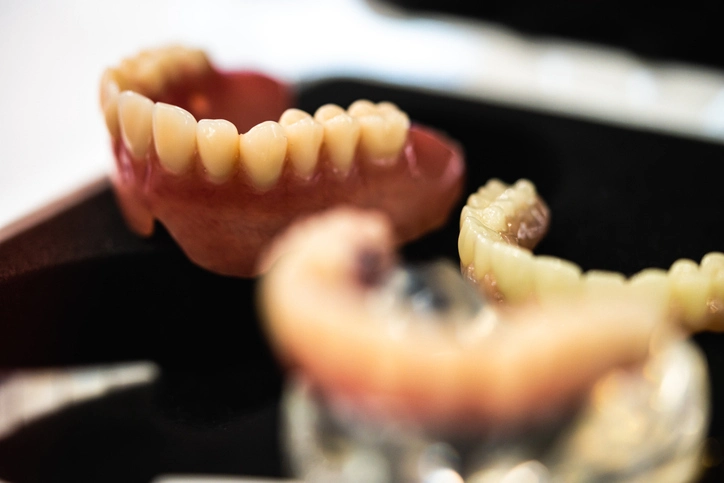
The successful function of complete dentures relies heavily on the patient’s ability to control and adapt to the prosthesis. This neuromuscular control is not innate; rather, it is learned gradually through continual denture use. When replacement dentures become necessary—whether due to wear, loss of denture fit, or changes in oral anatomy—it is clinically advantageous to minimize the extent of adaptation required by the patient. For elderly patients, whose neuromuscular coordination and adaptability may be reduced, this consideration becomes particularly important.
Denture copying techniques aim to reproduce key features of an existing, well-functioning denture while allowing the clinician and laboratory the flexibility to correct deficiencies. By duplicating favourable characteristics of the old prosthesis—such as polished surface contours, tooth position, and overall form—the patient’s adaptation time can be significantly reduced. This method provides a valuable alternative to conventional denture fabrication, especially in cases where the old denture served the patient well but requires selective improvement.
Table of Contents
ToggleRationale for Denture Copying
Denture copying is grounded in the principle that a patient’s existing denture often contains features that have become integral to their oral function. These may include:
- Established tooth positioning that supports speech and aesthetics
- Contours that guide the tongue and cheeks for improved stability
- Occlusal relationships that the patient has learned to control
- Polished surface anatomy that enhances muscular adaptation and functional movement
Rather than discarding these beneficial characteristics, denture copying seeks to preserve them while addressing any deficiencies such as poor fit, occlusal wear, or inappropriate vertical dimension of occlusion (OVD).
This approach is particularly relevant in:
- Elderly patients, where motor skill relearning is limited
- Patients satisfied with aesthetics, wishing to retain familiar appearance
- Chronic denture wearers who rely on specific denture contours for stability
- Immediate denture cases, where existing partial dentures guide the form of the replacement
Treatment Planning for Denture Copying
Effective treatment begins with careful assessment of the existing prosthesis. The clinician must determine which features should be retained and which require modification. This planning stage is essential because denture copying allows for detailed replication—but only when appropriate.
Key considerations during assessment
1. Fitting Surface
If the primary problem with the patient’s denture lies in the internal (tissue-fitting) surface—such as poor adaptation or loss of retention—then simple rebasing or relining may be sufficient. However, if other features need alteration, full copying may be more appropriate.
2. Polished Surface Contours
These surfaces guide the patient’s soft tissues during speech and mastication. Any change may require significant neuromuscular adaptation. If the patient has long used their existing dentures successfully, maintaining these contours is critical.
3. Occlusal Surfaces and Jaw Relationships
The vertical dimension of occlusion (OVD) and centric relation must be evaluated.
When OVD requires an increase, temporary additions using self-curing acrylic on the occlusal surfaces of the existing dentures can help assess tolerance. However, clinicians must remember such changes are irreversible.
4. Anterior Tooth Position and Appearance
Consideration of aesthetics, phonetics, lip support, tooth size, and midline orientation is essential. If the patient is satisfied with the appearance of the current anterior teeth, replication is advisable.
5. Posterior Tooth Form and Arch Width
Posterior tooth arrangement influences stability, chewing efficiency, and comfort. Arch width should complement tongue and cheek spaces to maintain optimal functional balance.
The outcome of this assessment guides the extent to which the old denture is copied and what modifications must be incorporated into the new prosthesis.
Copying Complete Dentures: Expanded Clinical Technique
A commonly used denture copying technique employs silicone putty and light-cured acrylic to replicate the internal and external surfaces of the denture. This method provides a predictable way to create “replica record blocks,” which serve as impression trays and occlusal registration units.
Below is a detailed, step-by-step description with expanded explanation of each stage.
Step 1: Clinic – Creating the Putty Mould
Correcting under-extension
Greenstick compound is applied to extend denture borders where required. This ensures that the copied version does not replicate inaccurate or deficient extensions.
Recording the external and internal surfaces
Silicone putty is used in two stages:
- First impression: captures the polished (external) surface and teeth.
- Second impression: after separating medium application, another putty layer records the fitting (internal) surface.
Using separate layers ensures accuracy and prevents distortion.
Returning the denture to the patient
Once the mould is complete, dentures are cleaned and reinserted so the patient is not left without their prosthesis.
Sending the moulds to the laboratory
The laboratory uses these moulds to fabricate acrylic duplicates.
Step 2: Laboratory – Fabricating the Acrylic Replica
The lab pours acrylic into the mould created from the original denture.
Acrylic baseplate
A self-cure acrylic baseplate is formed on the fit-surface impression, mimicking the internal anatomy of the original denture.
Wax filling
Wax fills the remaining mould space, forming the external contours and tooth positions.
Finishing
Sprues are trimmed, and the replica is polished. This copy now functions as a specialized record block for clinical adjustments.
Step 3: Clinic – Adjusting the Replica and Recording Impressions
At this stage, the acrylic copy serves multiple purposes: impression tray, occlusal rim, and diagnostic guide.
Adjusting contours
Modifications are made to correct deficiencies identified during treatment planning. Wax may be added or removed.
Recording working impressions
Low-viscosity silicone is used to refine the fitting surface. Adhesive helps fix the material to the acrylic copy tray.
Recording jaw relationship
“Bite recording paste” allows accurate registration of occlusal relationships.
Shade and mould selection
Tooth selection is finalized at this visit.
Step 4: Laboratory – Final Wax-Up and Tooth Setup
Casting impressions
Impressions taken with the copy denture are poured in stone, creating definitive working casts.
Setting teeth
Replica rims help guide tooth arrangement. Laboratory technicians remove portions of the copy where necessary to integrate new teeth in correct positions.
Border wax-up
Borders are shaped according to the functional impression recorded previously.
Step 5: Clinic – Try-In Appointment
The waxed denture is evaluated for:
- Fit and retention
- Aesthetics
- Phonetics
- Occlusion
- OVD and centric relation
Modifications are noted for the laboratory.
Step 6: Laboratory – Final Processing
The denture is processed, polished, and completed according to standard prosthodontic procedures.
Step 7: Clinic – Insertion and Review
The final denture is inserted. The clinician checks:
- Pressure spots
- Occlusion
- Extensions
- Patient comfort
Follow-up ensures adaptation and long-term function.
Alternative Denture Copying Methods
Some practitioners use alginate impressions, wax, or shellac to form copy dentures, especially when resources or putty materials are limited. However, an all-wax copy is discouraged, as wax lacks the rigidity needed for accurate impression taking and may distort under functional pressures.
Copying Partial Dentures for Immediate Dentures
Immediate dentures replace remaining natural teeth immediately after extraction. Partial denture wearers often have long-standing functional patterns shaped by their existing prosthesis. Copying the partial denture allows a smoother transition from partial to complete denture.
Below is a detailed account of this workflow.
Clinic 1 – Initial Records
- Correct under-extended borders of the partial denture using greenstick compound.
- Take impressions of the partial denture with putty in stock trays (as previously described).
- Record an alginate impression of the opposing arch.
This ensures both arches are recorded for articulation.
Laboratory 1 – Creating the Replica Partial Denture
A replica of the partial denture is fabricated using either wax, shellac, or acrylic. This replica becomes the blueprint for constructing the immediate denture.
Clinic 2 – Functional Impressions and Occlusal Records
- A wash impression is taken inside the replica using light-bodied silicone.
- Occlusion is registered using bite registration paste.
- An overall impression is taken with a stock tray containing the replica in situ.
This ensures accurate reproduction of the soft tissues immediately before extractions.
Laboratory 2 – Processing the Immediate Denture
The impression is cast and articulated. Teeth are set according to the prescription and patient requirements. The wash impression remains in place within the replica, preserving functional borders. After processing, the denture is prepared for insertion on the day of extraction.
Finishing and try-in procedures follow the same principles used for immediate complete dentures.
Conclusion
Denture copying represents a valuable technique in modern prosthodontics. By retaining functional and aesthetic aspects of a well-liked or well-adapted existing denture, clinicians can provide patients with new prostheses that require minimal adjustment and learning. This is particularly beneficial for elderly patients or long-term denture wearers who may struggle to adapt to major changes in contour, tooth position, or occlusion.
From complete dentures to partial dentures used in immediate replacement scenarios, the copying technique enhances clinical efficiency, improves patient satisfaction, and ensures continuity in oral function. When carried out with appropriate planning and accurate laboratory methods, denture copying offers predictable results with high acceptance rates.
References
- Yemm R. Copying complete dentures. International Dental Journal. 1991;41:233–240.
- Drummond JR, Newton JP, Yemm R. The Copy Denture Technique. British Dental Journal. 1988;164(6):203–206.
- Basker RM, Davenport JC, Thomason JM. Prosthetic Treatment of the Edentulous Patient. 5th ed. Wiley-Blackwell; 2011. (See chapter on denture replication.)
- Sharp J, Basker RM, Smith IS. A duplicated denture technique for geriatric patients. Gerodontology. 1985;4(2):93–97.
- Johnson A, Patrick D. Denture Copy Techniques in General Dental Practice. Primary Dental Care. 2003;10(4):115–120.
- Zarb GA, Hobkirk J, Eckert SE, Jacob R. Prosthodontic Treatment for Edentulous Patients: Complete Dentures and Implant-Supported Prostheses. 13th ed. Elsevier; 2013.
- McCord JF, Grant AA. Impression making for complete dentures. Journal of Prosthetic Dentistry. 2000;83(5):543–549.
- Lamb DJ. A clinical guide to complete denture prosthetics. British Dental Journal. 1993;175:259–266.
- Chow TW, Clark RK. Concepts of occlusion and articulation. British Dental Journal. 1991;170(6):235–242.
- Phoenix RD, Cagna DR, DeFreest CF. Stewart’s Clinical Removable Partial Prosthodontics. 4th ed. Quintessence Publishing; 2008. (Useful for partial denture replication.)
- Morrow RM, Rudd KD, Rhoads JE. Dental Laboratory Procedures: Complete Dentures. Mosby; 1986.
- Henderson D, Steffel VL. Immediate denture service for the dental patient. Journal of Prosthetic Dentistry. 1973;29(5):517–527.
- Davenport JC, Basker RM, Heath JR, Ralph JP. A Clinical Guide to Removable Partial Denture Design. British Dental Association; 2000.
- Jacob RF. The transition from natural dentition to complete dentures: patient adaptation and clinical considerations. Journal of Prosthodontics. 1998;7(2):80–85.
- Berry DC, Mahood M. Oral stereognosis and oral ability in complete denture wearers. British Dental Journal. 1966;120:179–185. (Useful for explaining neuromuscular adaptation.)
- Davis DM. The learning process with complete dentures. Journal of Oral Rehabilitation. 1991;18(4):307–315.