
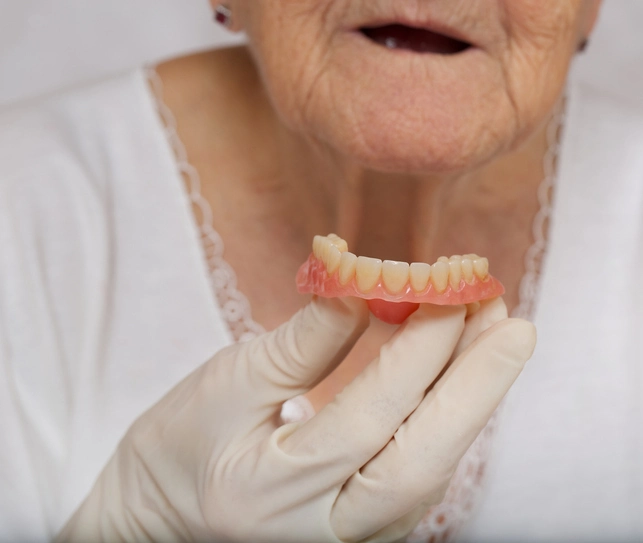
The construction and provision of complete dentures remains one of the most essential skills in prosthodontics. Although modern dental implant therapies have transformed tooth replacement strategies, conventional complete dentures continue to play a major role, particularly for older adults or patients with financial, anatomical, or medical limitations. Successful denture therapy relies not merely on mechanical precision, but on careful clinical evaluation, patient communication, and a deep understanding of function, aesthetics, biomechanics, and oral anatomy.
Table of Contents
ToggleThe Trial Insertion Appointment
The trial insertion stage is one of the most critical points in the denture fabrication process. At this stage, the teeth have been arranged in wax on temporary bases, giving both clinician and patient the opportunity to evaluate the proposed appearance, function, and overall suitability of the dentures before they are permanently processed in acrylic.
The purpose of the trial insertion is to avoid costly remakes, eliminate guesswork, and ensure the patient’s expectations are met. Once the dentures are processed, significant changes—especially involving tooth arrangement—become much more difficult and time-consuming.
Evaluating the Trial Dentures
Evaluation occurs both on the articulator and in the patient’s mouth, each providing essential information.
1. On and off the articulator
Checking the dentures on the articulator allows the clinician to assess:
- accuracy of jaw relation records
- balance and evenness of occlusal contacts
- symmetry and alignment of the arrangement
- any errors introduced during laboratory mounting
A common practice is to compare the new dentures with the patient’s existing prostheses. This helps determine whether features such as anterior tooth position, incisal display, or lip support—if acceptable previously—have been replicated appropriately.
2. Intraoral evaluation: fitting surface, extension, and stability
Once placed in the mouth, the clinician assesses:
- Flange extension: Overextension causes displacement and soreness, while underextension compromises retention.
- Retention: The denture should resist vertical dislodgement.
- Stability: Resistance to horizontal or rotational movements indicates correct adaptation to tissues.
- Tooth position relative to soft tissues: This is especially important for buccal corridors, midline alignment, and the neutral zone.
3. Evaluating both dentures together
With both dentures inserted together, the clinician evaluates:
- Vertical dimension of occlusion (OVD)
- Freeway space (FWS)
- Occlusion—including centric occlusion, guidance, contact patterns
- Phonetics, particularly the “S” and “F/V” sounds
- Aesthetics, especially the smile line, lip support, and facial profile
Phonetics is extremely useful.
- If the “S” sound whistles → OVD may be excessive or anterior teeth too far apart.
- If it sounds slurred → OVD may be insufficient or teeth too close.
These speech tests help confirm tooth position and vertical dimension more reliably than appearance alone.
Seeking the Patient’s Opinion
Patient involvement is essential. Denture acceptance is strongly influenced by the patient’s expectations, past experiences, and self-image. At the trial stage:
- show the patient their appearance from several angles
- confirm satisfaction with tooth shade, shape, and arrangement
- discuss any concerns regarding fullness or speech
Some clinicians ask patients to sign an acceptance form once they approve the setup. Although this does not replace clinical judgment, it helps ensure clear communication and reduces the likelihood of later dissatisfaction.
Recording and Preparing the Posterior Palatal Seal (Post-Dam)
The post-dam is vital for maxillary denture retention. Proper placement helps create a border seal and compensates for acrylic processing shrinkage.
1. Determining the vibrating line
This imaginary line marks the division between movable and non-movable soft palate. It is identified by asking the patient to say “Aah,” observing soft palate movement. The post-dam is placed just anterior to this vibrating line.
2. Assessing tissue compressibility
Using a blunt instrument or the clinician’s finger, the displaceability of the soft palate and posterior ridge tissues is assessed. This determines the depth—usually about 1 mm—of the post-dam.
3. Transferring the outline
The vibrating line and post-dam recommendations are marked on the master impression using an indelible pencil. In the laboratory, the technician carves the posterior palatal seal into the cast, often in a Cupid’s bow shape, before processing the acrylic.
A correctly formed seal significantly improves retention, especially for patients with shallow palates or reduced salivary flow.
The Prescription to the Technician
A thorough and precise instruction sheet ensures that the finished dentures match what was accepted during the trial. The prescription may include:
1. Tooth position adjustments
Any changes made during the trial appointment—particularly to posterior tooth relations or anterior aesthetics—should be documented.
2. Undercut management
Fibrous undercuts (>4 mm) and bony undercuts (>2 mm) require careful planning:
- plastering out the cast
- thickening the flange for later adjustment
Failure to address undercuts may lead to insertion difficulties and tissue trauma.
3. Relief and tin-foiling
Tin foil is sometimes requested to create space for relief areas, particularly over bony prominences or tori.
4. Gingival aesthetics
The clinician may request stippling, customized gingival contour, or shade matching for more natural gums.
5. Base material
Most complete dentures use heat-cure acrylic, but patients with a history of repeated fractures may benefit from a cobalt–chromium metal base, which is thinner, stronger, and more thermally conductive.
6. Identification marker
Modern standards often require dentures to include a legible identification marker, especially in elderly care environments.
Common Problems at the Trial Stage and Solutions
Understanding common errors helps clinicians correct issues efficiently before final processing.
1. Over-extended flanges
Cause:
- denture displacement
- ulceration
- difficulty inserting the denture
Solution:
Reduce the flange and re-evaluate.
2. Under-extended flanges
Cause:
- loss of retention
- food impaction
Solution:
Add wax temporarily; if successful → take a new impression with the waxed extension.
3. Teeth outside the neutral zone
Teeth positioned too far buccally or lingually can destabilize the denture and impair speech.
Solution:
Reset the teeth into the neutral zone.
4. Incorrect OVD
Too small OVD:
- drooping facial profile
- angular cheilitis
- reduced chewing efficiency
Correction usually requires re-recording OVD.
Too large OVD:
- clicking of teeth
- muscle fatigue
- strained appearance
- difficulty speaking
Requires replacement of lower teeth in wax and complete re-evaluation.
5. Occlusal discrepancies
Anterior or posterior open bites indicate errors in jaw relation registration or processing. Solution:
reset posterior teeth and re-establish correct OVD.
6. Aesthetic problems
- Too little upper anterior display: usually corrected by resetting anterior teeth.
- Too much display: reduce incisal length; adjustments marked with wax pencil.
- Inadequate lip support: add wax to the labial flange region.
These changes often require a new try-in appointment for confirmation.
Fitting the Completed Dentures
Once dentures are processed and polished, the fitting appointment focuses on ensuring comfort, function, and occlusal stability.
Adjustment of the Fitting Surface
Processing shrinkage and minor distortions are unavoidable. Therefore, the first step is to:
- smooth sharp edges
- check border extensions
- relieve the fitting surface only where necessary
Excessive removal of material should be avoided, as it may compromise retention.
Checking Occlusion
Denture occlusion differs significantly from natural tooth occlusion. Stability depends on achieving simultaneous bilateral contact and minimizing tipping forces.
1. Use of articulating paper
Ask the patient to occlude firmly. If there are heavy or uneven contacts:
- adjust the fossae, not the cusps
- avoid altering vertical dimension unnecessarily
2. For cusped teeth: the BULL rule
When making lateral adjustments:
- Buccal Upper
- Lingual Lower
cusp tips should be selectively reduced to eliminate interferences.
3. Protrusive adjustments
Remove any anterior interferences to smooth jaw movement and reduce tipping forces.
4. Balancing contacts
Although not always essential, they help maintain stability during lateral movements.
Some authorities prefer leaving minor adjustments until after a period of adaptation, allowing the patient to wear the dentures before achieving refined, balanced articulation.
Patient Instructions and Adaptation
Successful denture therapy depends heavily on patient education.
What to Expect
Patients must understand that adaptation takes time. Muscles of the lips, cheeks, and tongue must learn to function with the new prosthesis. Early difficulties may include:
- soreness
- increased salivation
- speech difficulties
- altered taste sensation
- challenges with eating
A soft diet is recommended initially, progressing to harder foods as confidence grows.
Soreness and Pain
If pain develops:
- the patient should continue wearing the denture so irritating areas are visible at the next visit
- if unbearable, they may remove them 24 hours before the appointment so mucosal changes are identifiable
Prompt adjustment prevents chronic ulceration and discouragement.
Wearing Dentures at Night
Patients are usually advised not to wear dentures during sleep to prevent:
- candidal infection
- mucosal inflammation
- bone resorption
However, during the first 1–2 weeks, wearing dentures full-time may help speed adaptation.
Denture Storage and Cleaning
When not worn, dentures must be stored in water to prevent drying and warpage. Plastic denture boxes are safer than using glasses at the bedside.
Patients should be taught proper cleaning techniques, emphasizing:
- mechanical cleaning
- avoidance of hot water
- maintaining hygiene to prevent stomatitis
Review Appointment and Managing Post-Insertion Problems
A review is essential 1–2 weeks after fitting. Most issues at this stage relate to either:
- fitting surface errors, or
- occlusal discrepancies
Identifying Sore Spots
Three useful materials help localize pressure areas:
1. Pressure relief cream
Painted onto the fitting surface, it transfers to the mucosa, revealing areas of excessive contact.
2. Indelible pencil
The pencil is applied to the denture surface; after insertion, the mark transfers to the affected mucosa.
3. Denture fixative with zinc oxide
This also marks corresponding pressure points.
Accurate identification prevents unnecessary grinding in non-problematic areas.
Occlusal Faults
If no fitting surface flaws are found, soreness may be caused by occlusal issues. Excessive OVD, especially, results in:
- muscular fatigue
- generalised soreness
- instability
Corrections may include selective grinding or remounting.
Regular Maintenance
Patients must understand the importance of ongoing review. Changes in oral tissues over time—including resorption of alveolar bone—mean that periodic relines, rebasing, or remakes may be required.
Conclusion
The successful construction and delivery of complete dentures require a meticulous, step-by-step approach, integrating both scientific understanding and clinical artistry. The trial insertion stage ensures functional and aesthetic correctness before irreversible processing occurs. The fitting appointment establishes comfortable adaptation and refined occlusion. Finally, consistent patient instruction and routine follow-up appointments safeguard long-term success and patient satisfaction.
Dentures remain a life-changing prosthodontic treatment for millions worldwide. When clinicians follow the principles outlined above—thorough assessment, precise adjustments, and patient-centered care—they can deliver prostheses that restore not only mastication and phonetics, but confidence, comfort, and quality of life.
References
- Zarb, G. A., Hobkirk, J., Eckert, S., & Jacob, R. (2013). Prosthodontic Treatment for Edentulous Patients: Complete Dentures and Implant-Supported Prostheses (13th ed.). St. Louis: Elsevier Mosby.
— Classic reference on complete denture theory, occlusion, post-dam, and trial insertion principles. - McCord, J. F., & Grant, A. A. (2000). “Complete dentures: an introduction.” British Dental Journal, 188(7), 373–380.
— Provides practical guidance for denture design, fitting, and patient expectations. - Basker, R. M., Davenport, J. C., & Thomason, J. M. (2011). Prosthetic Treatment of the Edentulous Patient (5th ed.). Oxford: Wiley-Blackwell.
— Standard UK prosthodontics text, covers neutral zone, vertical dimension, and denture impressions. - Jacob, R. F. (1998). “The traditional clinical technique for complete dentures.” Journal of Prosthetic Dentistry, 79(4), 419–431.
— Detailed explanation of clinical steps including trial insertion and occlusal adjustments. - Allen, P. F., & McMillan, A. S. (2003). “A review of the functional and psychosocial outcomes of edentulousness.” International Journal of Prosthodontics, 16(2), 118–126.
— Discusses patient adaptation, satisfaction, and expectations. - Felton, D. A. (2009). “Edentulism and comorbid factors.” Journal of Prosthodontics, 18(2), 88–96.
— Important background on why denture management needs comprehensive patient instruction. - Carlsson, G. E. (2006). “Facts and fallacies: an evidence base for complete dentures.” Journal of the American Dental Association, 137(3), 343–352.
— Evidence-based analysis of denture occlusion, stability, and clinical outcomes. - McCord, J. F., Smith, P. W., & Grey, N. J. (2004). “Management of the edentulous patient.” British Dental Journal, 196(3), 261–268.
— Covers sore spots, review appointments, and patient adaptation. - Glossary of Prosthodontic Terms (GPT-9). (2017). Journal of Prosthetic Dentistry, 117(5S), e1–e105.
— Authoritative source for terminology (e.g., OVD, post-dam, retention, stability). - Winkler, S. (2000). Essentials of Complete Denture Prosthodontics (2nd ed.). New Delhi: AITBS.
— Good reference for post-dam carving, flange problems, and occlusion troubleshooting. - Johnson, A., & Wildgoose, D. G. (2015). Complete Dentures (3rd ed.). Oxford: Oxford University Press.
— Clear clinical explanations on fitting, occlusal adjustment, and patient education. - Jokstad, A. (2018). Osseointegration and Dental Implants. Blackwell Publishing.
— Comparative insights for denture vs. implant-supported prostheses. - Hayakawa, I. (2000). Principles and Practices of Complete Dentures. Tokyo: Quintessence Publishing.
— Key text for functional requirements, aesthetics, and phonetic evaluation.